Hamstring Strains
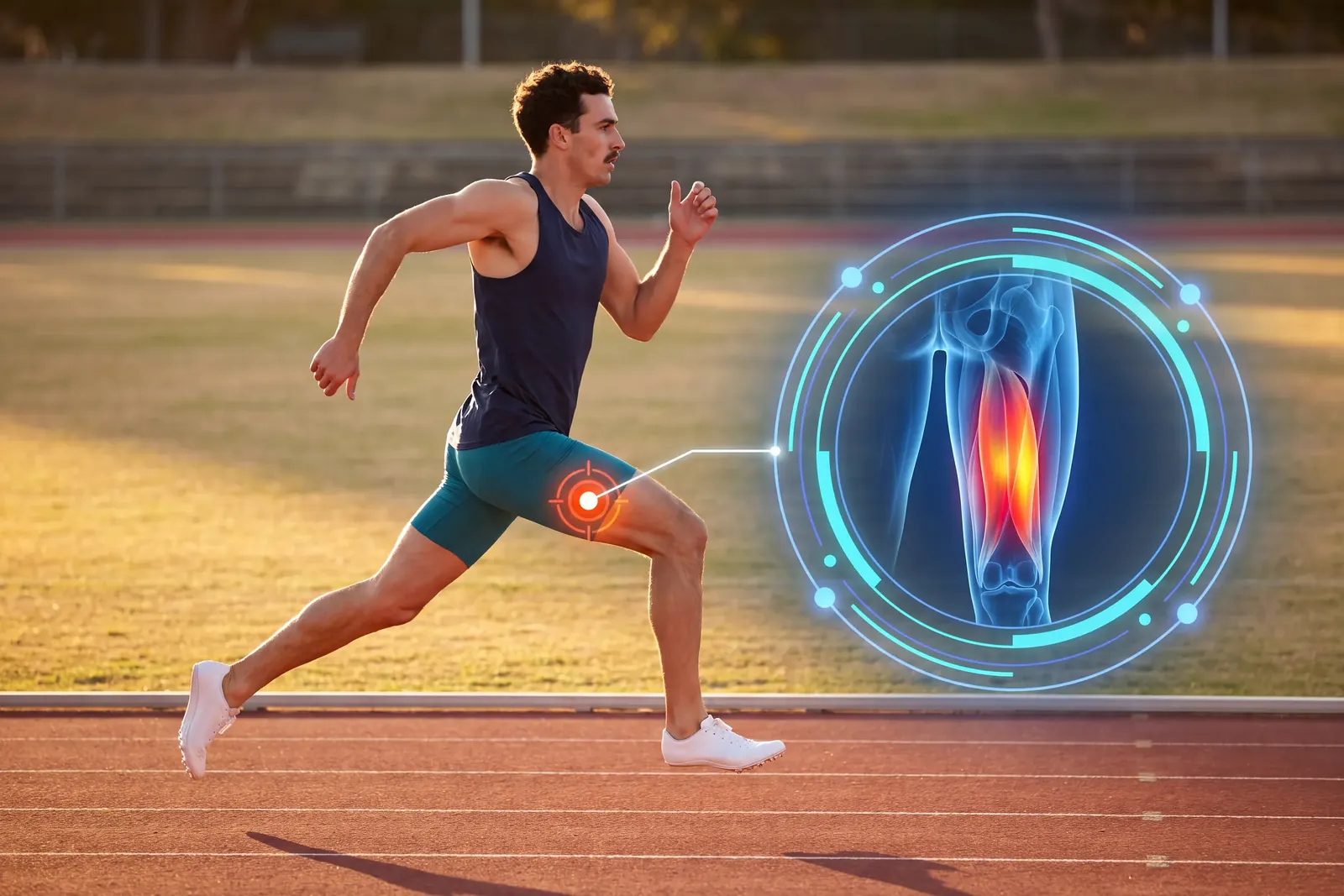
What happens in a Hamstring Strain?
The Hamstrings are prone to an acute strain during high speed running, more so in "terminal swing phase" which is right at the end of a long stride before making contact with the ground (Schache et al., 2012). The hamstrings have to slow down the knee before the foot makes contact with the floor and this is the critical phase where a Hamstring injury can occur in running. The Biceps Femoris is the common culprit that is strained from the Hamstring group.
Why are some people prone to a Hamstring Strain?
Some risk factors are having a previous hamstring strain, poorly rehabilitating a previous hamstring strain, being older and participating in a sprinting sport.
The hamstrings need to be multiple things to tolerate sprinting and acceleration. They need to be:
- Strong
- Strong on eccentric phase or during deceleration
- Need to tolerate working at long lengths
- Need to be able to tolerate everything above at speed
Types & Grades
Type 1 – High speed strain during a sprint or acceleration type movement
Type 2 – Slower slight incident where the hamstring is stretched to it's limit Eg. In gymnastics
The grades represents the severity of the injury:
- Grade 1 – Small tear of a few fibres
- Grade 2 – Rupture of one hamstring
- Grade 3 – A rupture of the hamstring off of the bone, sometimes taking some bone with it (avulsions)
What are the symptoms?
- For Grade 1 – Pain & 'Tightness' feeling in the back of the leg
- For Grade 2 or 3 – A higher level of pain with the same symptoms
- Stretching the back of the leg should aggravate these symptoms
- Maybe some bruising can occur in the first few days to a week
How Physiotherapy can Help
Your qualified Physiotherapist will first diagnose your Hamstring Strain and ensure it is not anything more sinister. You will then go through a periodised strengthening program of the lower limb. This will be followed by return to running or sport specific activity.
What not to do if you think you have a Hamstring strain
- Aggravate symptoms – Don't 'run it off!' Come and see us to achieve a proper recovery without any future issues
- Do NOT stay bedridden – Inactivity is bad, gentle exercise that doesn't exacerbate symptoms is optimal
- You shouldn't take anti-inflammatories, and definitely not excessive amounts for long periods of time
References:
Schache et al (2012). Mechanics of the human hamstring muscles during sprinting. Medicine and science in sports and exercise, 44(4):647-58.
Karolinska Institutet. (2017). Anti-inflammatory drugs can inhibit muscle growth. ScienceDaily. Retrieved October 21, 2020 from www.sciencedaily.com/releases/2017/08/170828125123.htm