Shoulder and arm pain
Reach, lift and sleep without the pinch.
Shoulder bursitis, rotator cuff pain and tennis elbow respond to the right program. We find which structures are involved and rebuild movement and strength.
Shoulder bursitis
Shoulder bursitis is an irritation or inflammation of the bursa, a small fluid-filled sac that reduces friction between the bone and tendons of the shoulder. Once inflamed it results in pain, swelling and difficulty with shoulder movements. Other structures may also be involved, including the rotator cuff muscles and their tendons.
Tennis elbow
Tennis elbow (previously known as lateral epicondylitis) is now known as epicondylalgia. Despite popular opinion, this condition is not due to inflammation but rather to overloading of the tendons of the forearm where they attach to the bone. These forearm muscles are used in almost every activity all day long, contributing to gripping and moving the hand backwards.
Our three-step program
1. Thorough examination and diagnosis
The shoulder and elbow need a specific examination to determine which structures are contributing to your pain. We also screen your neck to rule out referred pain, and check the strength of the forearm muscles in gripping and functional tasks.
2. Managing your symptoms
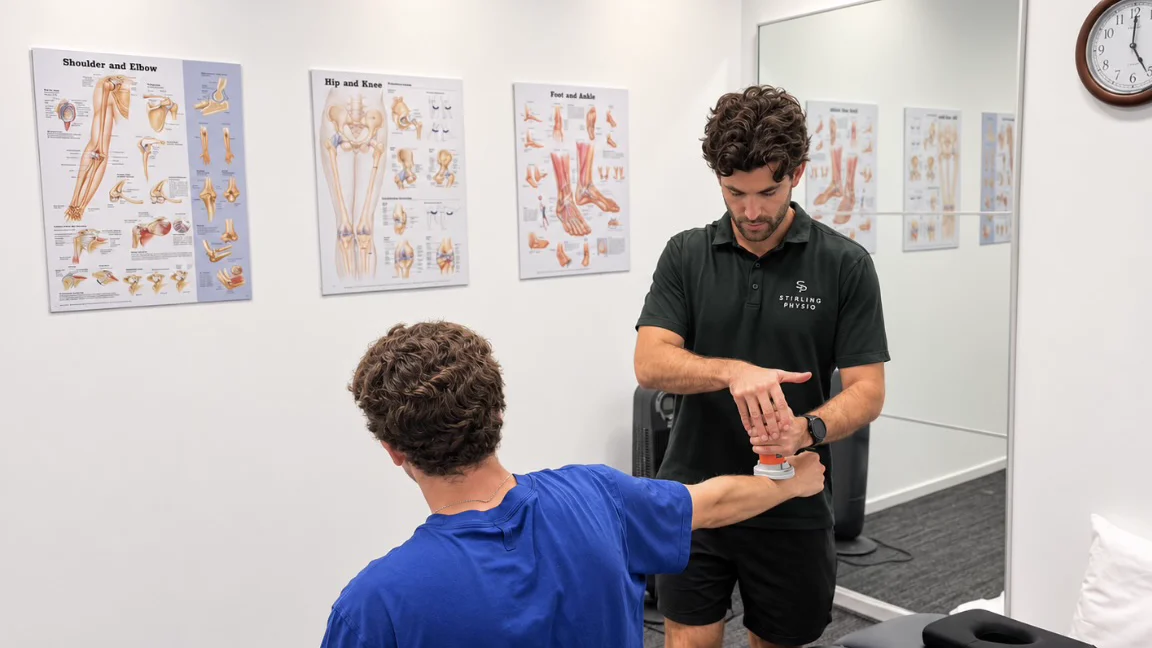
'Hands on' therapies such as joint mobilisation, massage, and passive and active stretching can be used to improve your pain. Dry needling, taping and electrotherapy options may also be used, and for chronic presentations shockwave therapy may help the recovery process.
3. Restore movement, strength and function
A strengthening and stretching program is vital for recovery. Your physiotherapist will tailor a program to suit your goals and capabilities. Persistence and patience are key in this phase to see improvement and prevent re-injury.